

Publication Details
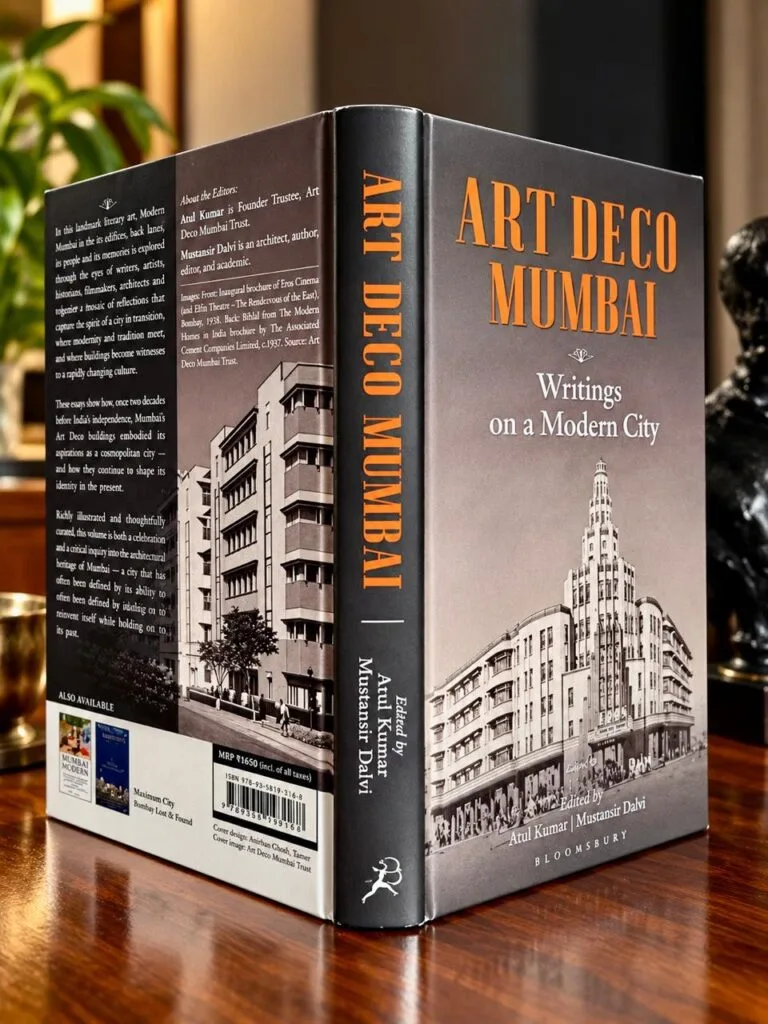
- Title: Art Deco Mumbai: Writings on a Modern City
- Editors: Atul Kumar and Mustansir Dalvi
- Publisher: Bloomsbury Academic India, An Imprint of Bloomsbury Publishing Plc
- Publication date: 30 August 2026
- Format: Hardback, eBook
- Edition: 1st
- Pages: 436
- Dimensions: 216 × 135 mm
- ISBN: 9789361311123; eBook: 978-93-6131-465-
Meet the Editors
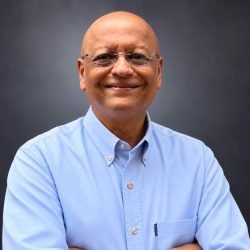
Founder Trustee of Art Deco Mumbai Trust, Atul Kumar has pioneered research on Mumbai’s Art Deco and its role in the city’s modern history. He is a member of the Board of Directors of ICADS and Chair of its Preservation Committee.
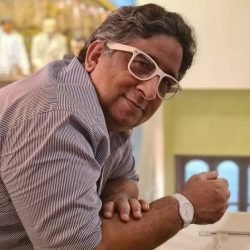
Mustansir Dalvi is an architect, author, editor and academic, and a Trustee of Art Deco Mumbai. His doctoral research at IIT Bombay focused on the semiotics of Bombay’s Art Deco architecture.
Here’s what you can expect
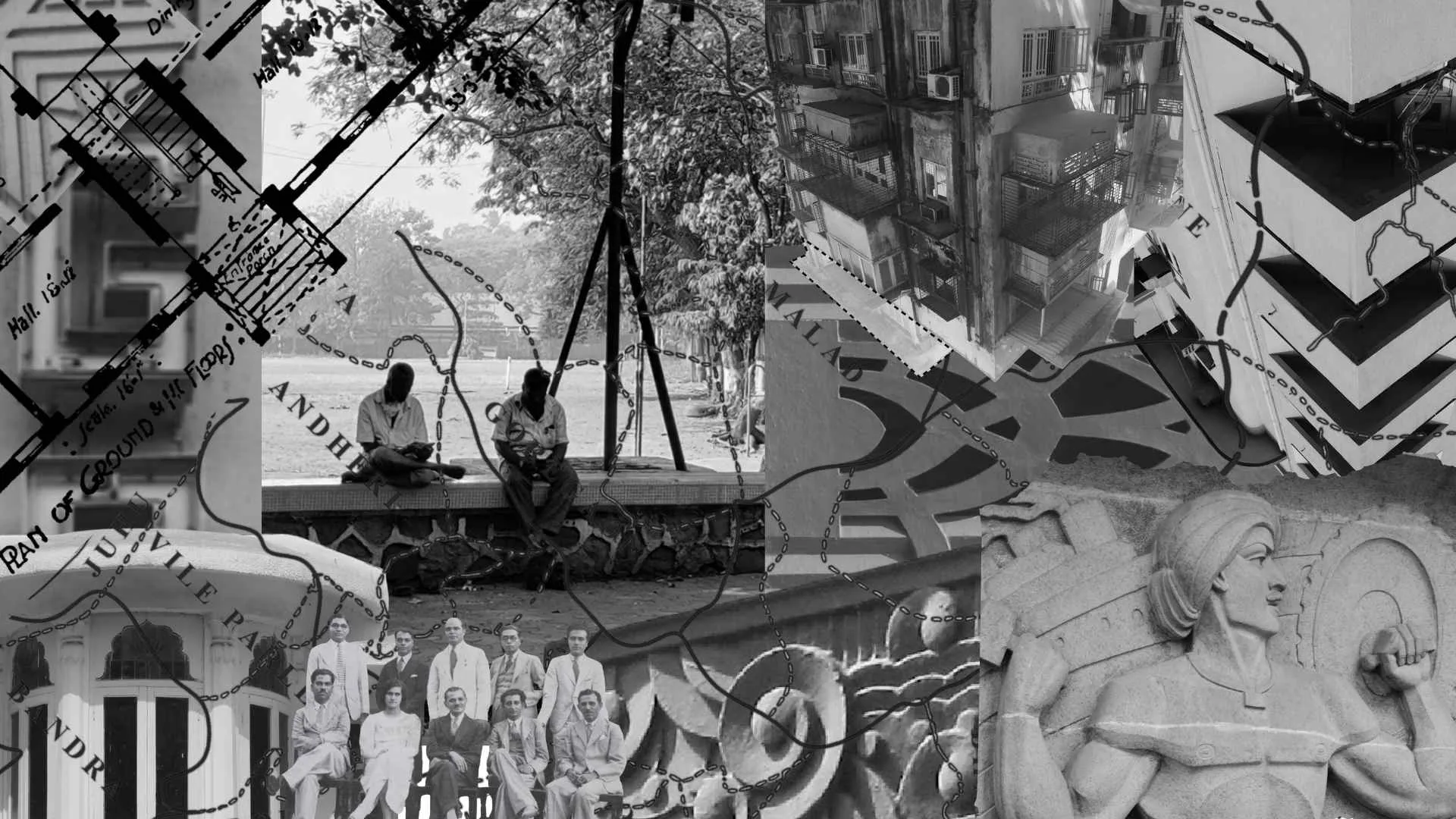
In the decades preceding Indian independence, the city expanded, new planned neighbourhoods emerged, and people began to envision what a modern Indian city might look like. Art Deco became one of the most conspicuous manifestations of that transformation: cosmopolitan in character, but unmistakably influenced by Bombay. Walk through Mumbai today, and you’ll find Art Deco almost everywhere- in the sweeping curves of Marine Drive, the geometric elements of a Shivaji Park apartment, the inscription above a building entrance, or the façade of a cinema you’ve certainly passed countless times. These buildings have become part of the city’s visual landscape and provide a window into a rapidly evolving Bombay.
Art Deco Mumbai: Writings on a Modern City is an academic publication. The book includes essays from historians, architects, academics, and scholars, investigating the origins of Art Deco in Bombay and how the city adopted the style. Drawing on extensive research and archival material, the essays take us from the history and evolution of Art Deco to the homes, movies, colours, materials, typography and consumer culture that surrounded it. What makes Bombay’s Art Deco so interesting is that it was never confined to architecture. Bombay did not simply accept an international design; it reshaped it through geometric forms and modern materials, incorporating local references, tropical imagery and a vernacular identity that reflected the ambitions of a changing India. Art Deco Mumbai: Writings on a Modern City brings these different stories together to offer a richer picture of the city and the people who shaped it.
For the Table of Contents, click here.
The Themes It Explores
Part 1 – History
The first section comprises writings that aptly trace the genesis, transition and spread of Art Deco. For instance, it traces the transformation of Bombay into an urban, commercial centre, amidst increased land reclamations, the need for a new ‘modern’ architectural identity, and nationalist politics of the 1930s and 40s, like the ‘Swadeshi’ movement. The early patronage and popularisation of the style by Indian princely families, and its spread beyond Fort into the suburbs of a rapidly expanding city, form part of this section. It also traces the style’s decline after World War II, shaped by changing ideals for a newly independent nation and growing criticism of the style. It aims to serve as a primer for establishing additional context.
Part 2 – Art Deco Bombay
This section delves into the socio-cultural norms of interwar Bombay that shaped the development of Art Deco, and the city itself. New ways of living were espoused during this period, with ‘apartment style’ living being the most prominent one. The ‘home’ was now an important space that gained the attention of architects, designers, and building companies; the field of interior design also became popular around this time. With rising consumerism, companies vociferously advertised their products as a way to embrace modernity. Apart from print advertisements, even films from that time period served as a canvas where aspirations and modern lifestyles were reflected. A seminal exhibition held by the Indian Institute of Architects (IIA) in 1937 was the architects’ preferred way of informing the masses. The politics of Bombay’s Art Deco situated within British colonial India is examined via case studies.
Part 3 – Art Deco Buildings
This section focuses on the architectural component of Mumbai’s Art Deco buildings. The style’s most visible impact and enduring legacy is in its built form, as Art Deco Mumbai’s extensive photo documentation initiative proves. It analyses specific aspects of these buildings, including their display typography, materiality and technological advancements, as well as structural alterations over time, within the context in which these buildings and the Art Deco precincts came up.
Part 4 – Oral History
Much has been written about Bombay’s famed Victorian Gothic architecture and its place in the city’s history. However, the Art Deco architecture, a majority of which was designed by first generation Indian architects, is often overlooked. A major reason for this is the lack of sources on these Indian architects and Art Deco neighbourhoods beyond the Fort heritage precinct. This section attempts to fill this gap by referring to a significant yet often neglected source – oral histories. They become a vital source in this case where written records are lacking, and provide varied perspectives and add dynamism to the otherwise mostly static research when it comes to architectural heritage. By relating their personal histories, these voices offer another insight into the “lived heritage” aspect of Art Deco buildings and neighbourhoods. Here, you will find important voices talking about their experiences as inhabitants of culturally important neighbourhoods and buildings such as Shivaji Park and Marine Drive that shaped Bombay.
While the book is divided on the basis of themes and structured to ensure a comprehensive flow, it is ultimately a collection of individual essays that can also be picked up and read at random. Mustansir Dalvi, co-editor of this volume, describes Mumbai’s Art Deco as Gesamtkunstwerk, meaning ‘Total Design.’ The idea behind this book was also formulated in a similar vein – to research and engage with Art Deco in its totality. It only seems fair that a total and malleable style such as Art Deco is studied in an all-encompassing way.
About the Contributors
Each section of the book, as well as the ‘Introduction’ and ‘Afterword’, is prefaced by an introductory text from an academic or expert in the field. These include Atul Kumar, Mustansir Dalvi, Preeti Chopra, Abigail McGowan, Michael Windover and Rahul Mehrotra.
Other contributors consist of a diverse milieu, including researchers from the fields of modern history, design, political science, film studies, architecture, economics, conservation, architectural history, heritage conservation, visual studies, and journalism, among others.